


 Daxil ol
 Online Xəbərlər
 Xəbərlər
 Hava
Hava Maqnit qasırğaları
 Namaz təqvimi
 Kalori kalkulyatoru
 Qiymətli metallar
 Valyuta konvertoru
 Kredit Kalkulyatoru
 Kriptovalyuta
 Bürclər
 Sual - Cavab
 İnternet sürətini yoxla
 Neftin Qiyməti
 Azərbaycan Radiosu
 Azərbaycan televiziyası
 Haqqımızda


 TDSMedia © 2026 Bütün hüquqlar qorunur
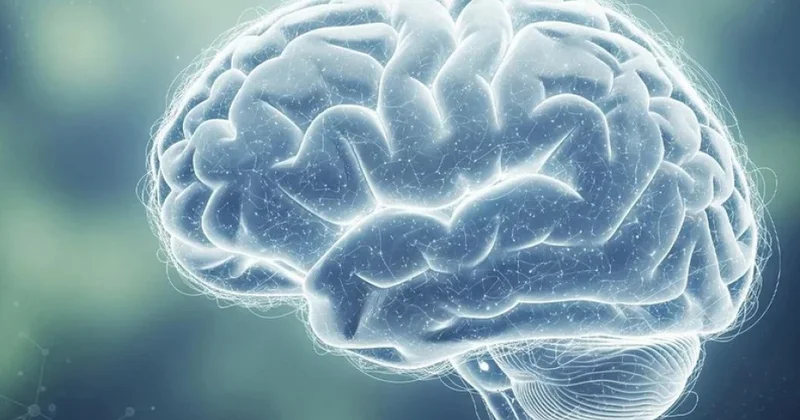
Chinese scientists shed light on how brain switches between thinking, perceiving
Icma.az bildirir, Azertag portalına istinadən.
Baku, April 9, AZERTAC
Have you ever wondered how your brain manages to switch between remembering a birthday party and focusing on a friend's face right in front of you? Chinese scientists may have found the answer to this question, according to China Daily.
A research team led by scientists from the Institute of Psychology at the Chinese Academy of Sciences has uncovered an important organizational principle within a large-scale brain network, known as the default mode network (DMN).
The DMN is a set of interconnected brain regions long associated with internal thoughts, such as recalling the past, imagining the future or thinking about oneself. However, recent studies have also shown that the DMN is engaged in externally oriented cognitive tasks, like understanding language or recognizing people's emotions. Until now, no one knew how the same network could handle both jobs.
To figure out how the DMN works, the researchers combined analyses of directional functional connectivity (which reflects the direction of information flow), intrinsic network organization, and task-evoked brain activity across multiple datasets. Their findings suggest that the DMN is not a single, uniform network, but consists of distinct subregions, each with its own special role in handling information.
In a study published recently in the journal Proceedings of the National Academy of Sciences (PNAS), the research team revealed that different parts of the DMN act as either "senders" or "receivers" of information.
According to the study, receiver-like areas are better at taking in information from the outside world. They help the brain process what we see and hear in the surrounding environment. Sender-like areas are better at sending information out to other brain systems. They help guide our actions based on memories and past experiences.
Using advanced brain imaging and data analysis, the researchers found that these two types of areas are involved in different kinds of tasks. For example, receiver-like areas are more active when a person makes decisions based on what they see, like recognizing a face. In contrast, sender-like areas are more active when a person makes decisions based on memory.
"Our findings suggest that the DMN's role in both external perception and internal cognition is rooted in its natural division into receiver-like and sender-like zones," said Zhang Meichao, who led the study.
"This research provides a new, simple way to understand how the brain's association cortex, the part responsible for higher-level thinking, helps us move smoothly between perceiving the world and recalling our own thoughts," Zhang added.
 Bu mövzuda digər xəbərlər:
 Baxış sayı:202
 Bu xəbər 09 Aprel 2026 13:03 mənbədən arxivləşdirilmişdir





 Günün ən çox oxunanları